First Trade of the Day: The Decision That Sets the Ceiling
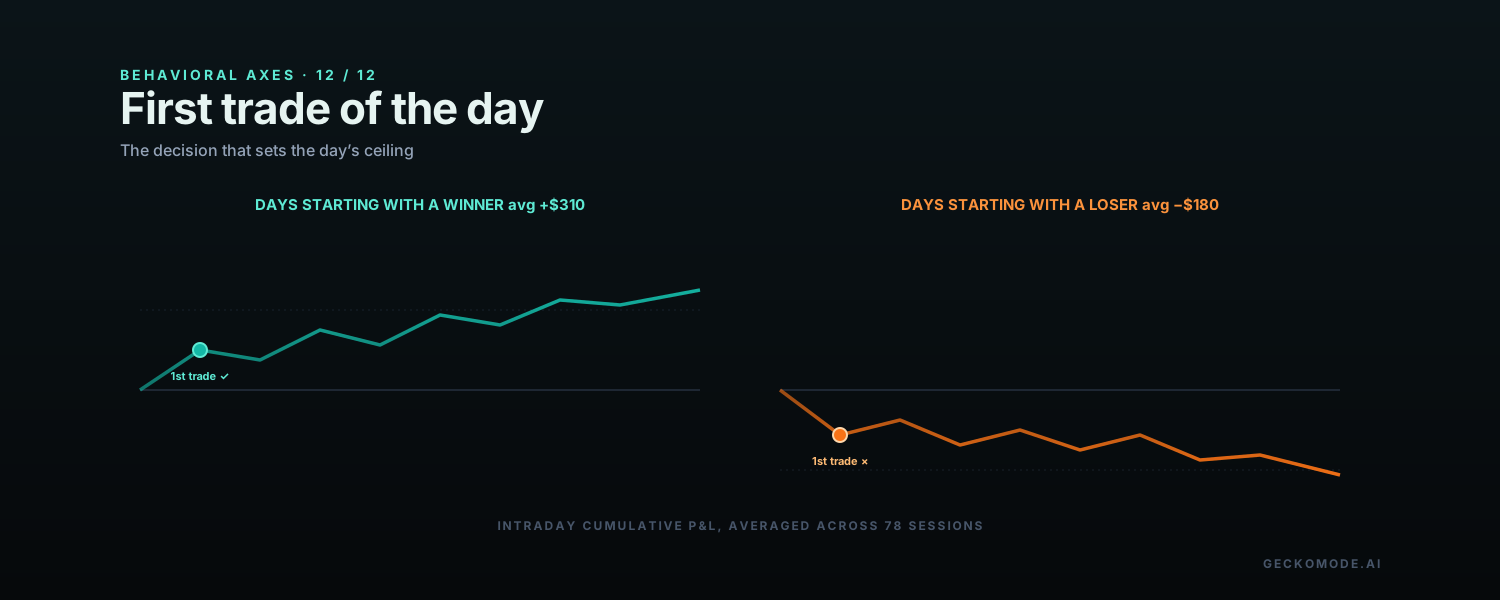
The first trade of the day sets the temperature of every trade that follows. A clean first trade buys focus for the rest of the session. A bad first trade buys tilt, a worse second trade, and a day the trader spends recovering from a decision made in the first ten minutes. First-trade-of-day is the axis Gecko uses to ask the question the trader never quite gets around to: is your first trade actually a setup, or is it a coin flip disguised as a setup because the platform is open and you have to start somewhere?
Why the first trade is its own statistic
Most behavioral leaks are visible only after the trader has been at it for a few hours. The first trade is the exception. It carries the residue of pre-market anticipation, the urge to make something happen now that the open has arrived, and the absence of any in-session context to compare a candidate setup against. The result is a trade that, on average, performs measurably worse than the trader’s baseline — and the bad outcome plus its timing combine to dominate the rest of the day.
This axis matters because the cost is not just the first-trade dollars. It is the second-trade revenge attempt, the third-trade size escalation, the fourth- trade tilt re-entry. The first trade is a probability gate on the entire session’s behavioral quality.
The fingerprint in your trade data
| Pattern in the data | What it means |
|---|---|
| First trade of the day has materially worse expectancy than later trades | The trader is taking lower-quality setups before they have a market read. |
| First-trade win rate is below the overall win rate | Selection on the first trade is degraded by pre-market anticipation. |
| Days where the first trade is a loss have meaningfully worse net P&L than days where the first trade is a win | The first trade is a leading indicator of session quality, not just one trade among many. |
| Time-to-first-trade is consistently very short after the open | The trader is firing within minutes of the bell, regardless of whether a setup actually printed. |
The math: the first trade sets the day’s ceiling
Run a trader’s last hundred sessions and split them by whether the first trade was a winner or a loser. Sessions starting with a winner often net 1.4 R for the day on average; sessions starting with a loser often net −0.3 R. The market did not change. The trader did. The winning first trade buys patience and calibration; the losing one buys the first stage of a revenge cycle.
The math implication is uncomfortable: improving the quality of the first trade is one of the highest-multiplier moves a trader can make, because the gain compounds across every subsequent decision in the session.
How Gecko measures it
The first-trade-of-day axis isolates the first closing trade of each session and computes:
- Per-trade expectancy on first trades vs all other trades.
- Same-day net P&L on sessions starting with a winner vs starting with a loser.
- Distribution of time-from-open-to-first-trade, with the tails (very fast or very slow) tagged for the trader to inspect.
A worked example
An equity day trader uploads four months of activity covering 78 sessions. First-trade per-trade expectancy is −0.4 R; expectancy on all subsequent trades is +0.3 R. Sessions with a winning first trade average +$310 net; sessions with a losing first trade average −$180 net. Median time-from-open-to-first-trade is 2 minutes. The diagnosis is unambiguous: the trader is firing within two minutes of the bell on a setup that has not actually printed, and the bad first trade defines the rest of the session. The single highest-dollar fix is a written rule that says “no trades in the first ten minutes of the session unless the setup checklist clears in full.”
The fix: the first trade earns its way in
First-trade-of-day discipline is one of the easiest rules to apply because it sits at a structural edge of the day:
- Define a written first-trade gate. The setup must clear every box in the trader’s written checklist; no half-credit, no “close enough.”
- Use a minimum delay from the open. Ten minutes is a defensible default; the goal is to let the market form enough structure that a setup is identifiable rather than imagined.
- Treat a bad first trade as a defensive reset. After a first-trade loss, the same-instrument cooldown rule from revenge re-entry kicks in automatically, plus a 15-minute global pause.
- Audit first-trade outcomes monthly. The trader who tracks the cost of their first trade catches drift earlier than the trader who tracks only the day-end number.
What to read next
The natural pair is the after-loss tilt deep-dive — a bad first trade is the most reliable trigger for the rest of the tilt distribution. For the longer-form treatment of patient process, the Linda Raschke profile is the cleanest piece on letting the market come to you rather than chasing it from the first tick.
Grade your first trade →Free to start. First 100 trades on the house. No broker connection required.
Drop in a single statement. Gecko produces a one-page Behavioral Diagnosis ranking your costliest habits in actual dollars. Free to start. No card. No broker connection.
Short notes, usually once or twice a month. Unsubscribe in one click.
No account needed. We use your email only to send Gecko blog posts, and the link at the bottom of every email opts you out in one click.
More on the blog
- The AI Debt Machine: Circular Financing, Off-Balance-Sheet Data Centers, and the Ghosts of Bubbles PastThe AI build-out has quietly shifted from cash to debt: hyperscaler bonds near $194 billion in 2026, private credit's share of AI financing up from about 9% to 34%, debt parked in off-balance-sheet vehicles, and a circular loop among Nvidia, OpenAI, Oracle and CoreWeave. What telecom, Enron and the 1920s say about it, and what a trader should actually do.
- When the Consumer BreaksHousehold debt booms have a long record of ending in slowdowns that forecasters miss. What that history says about markets, and about the most overlooked balance sheet in trading: your own.
- How Banking Crises Actually StartThe run is the last chapter, not the first. What 150 years of bank failures teach traders about reading stress, and about the mistakes made when the headlines finally arrive.