Weekend Gap Risk: The Option You Give the Market Every Friday
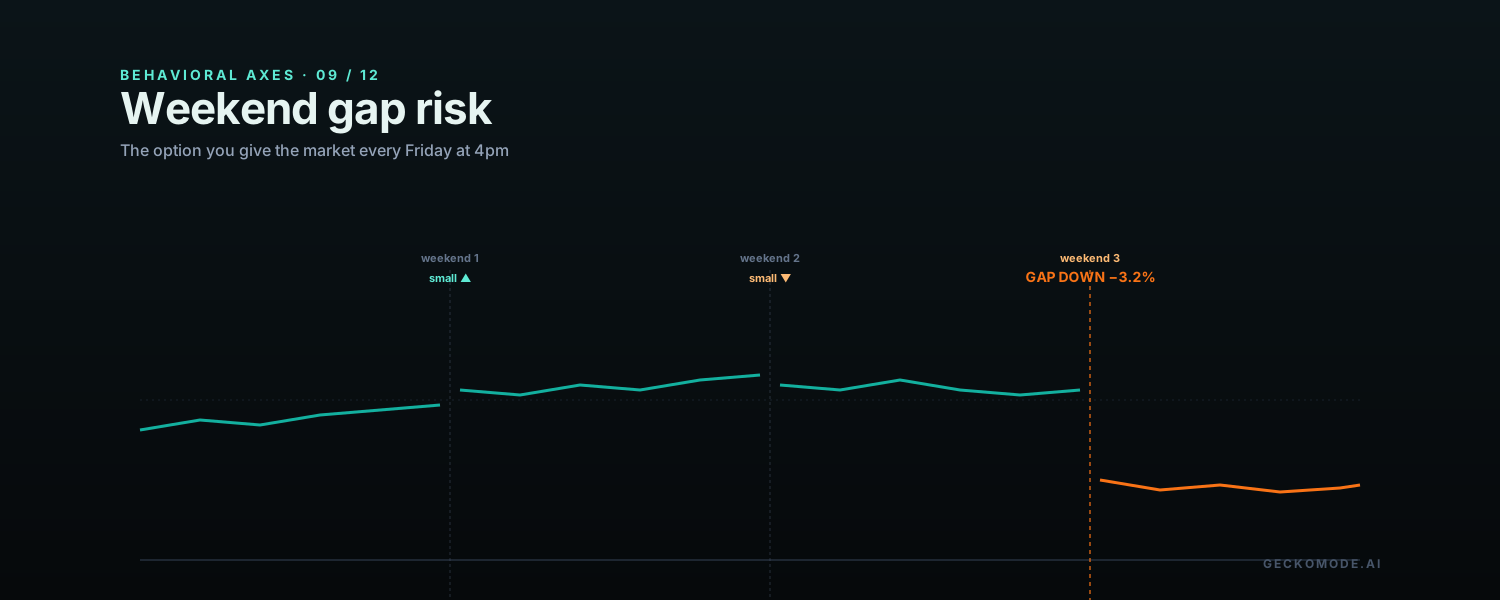
Markets do not stop when the trader does. Equity and futures markets close at the weekend; FX and crypto thin out; news releases happen at any hour. A position held across a close-period gives back the most expensive option in trading: the option to react. The weekend-gap-risk axis measures the dollar cost of that surrendered option on the trader’s own book, in their own data, and almost every account that holds across a weekend has a leak bigger than the trader expects.
Why the gap is asymmetric
A position into a weekend is not just exposed to two extra days of price action; it is exposed to two days of news that the trader cannot trade out of. The asymmetry of the risk is hidden inside an apparently neutral decision (hold or close). The trader feels they are flat on opinion if they hold; they are actually long a piece of news risk they have not priced in. The market then opens with a gap that the trader had no chance to manage with the same tools they would have used during the week.
The behavioral piece is that the cost of weekend holds often does not show up evenly. Most weekends produce small, manageable gaps. The infrequent large gap that runs the trader through their stop is what dominates the long-run distribution, and the small gaps lull the trader into underestimating the tail.
The fingerprint in your trade data
| Pattern in the data | What it means |
|---|---|
| Monday open vs Friday close P&L is skewed negative | The trader’s typical weekend-held position is taking the gap on the wrong side. |
| Tail losses are concentrated in Monday morning closes | The infrequent large gap is doing more damage than the small ones save. |
| Stop-loss orders are jumped on the gap, not filled at the planned price | Actual losses on stopped-out gap positions exceed planned losses by a meaningful margin. |
| Positions held over weekends have lower realized win rate than intra-week trades | Weekend exposure is degrading the strategy’s edge net of gap risk. |
The math: an option you give away every Friday
Suppose a trader holds three positions over an average weekend, each sized at 1 percent of equity. Average weekend gap impact: −0.05 percent per position (a small negative drift). Tail-event weekend (one in twenty): −1.5 percent per position. Expected weekly weekend cost: roughly 0.10 percent of equity per weekend — small in any single week, around 5 percent of equity per year in aggregate. The trader is paying a 5-percent tax for the comfort of not closing positions on Friday afternoon, and usually does not see it as a tax because the per-weekend cost is below the noise floor of the daily P&L.
How Gecko measures it
The weekend-gap-risk axis bins each trade by whether it spans a market close period (weekend or holiday) and compares per-trade outcomes on the two subsets:
- Net P&L on weekend-held positions vs intra-week positions, normalized for hold time.
- The gap between planned and actual stop-out price on weekend-held trades that hit their stops.
- The contribution of the worst-five gap events to total P&L on the weekend-held subset. If those five events dominate the cost, the trader is being defined by the tail.
A worked example
A futures and equities trader uploads two years of activity. Weekend-held positions number 86 of 540 closed trades. Intra-week trades net +$23,500; weekend-held trades net −$3,800 — and the five worst weekend gap events alone account for −$5,200. Removing those five would have made weekend-held trades a small positive contributor. The diagnosis: weekend gaps are not bleeding the account on average; they are blowing through it on the rare extreme days. The trader has two clean choices: stop holding into weekends entirely, or size the positions that do span a close so the worst-case gap is survivable.
The fix: price the risk, then choose
Weekend gap risk responds to a rule made before the close, not in the moment:
- Default to flat by Friday close. The trader closes unless there is a written rule for the specific position that says hold.
- For positions that span the close, size as if the worst- observed weekend gap will happen this weekend. If the full-size position cannot survive that, the position is too big.
- Use synthetic protection (option spreads, hedges) on positions that genuinely need to be held. The cost of the hedge is the price of the optionality the trader was previously giving away.
- Audit weekend P&L separately every quarter. If the line is consistently negative, the trader is paying for a habit they should not have.
What to read next
The cleanest piece on respecting tail risk is the Paul Tudor Jones profile — defense first, no exception. The Mackay review is the long-form lesson on how rare events define long-run results.
Audit your weekends →Free to start. First 100 trades on the house. No broker connection required.
Drop in a single statement. Gecko produces a one-page Behavioral Diagnosis ranking your costliest habits in actual dollars. Free to start. No card. No broker connection.
Short notes, usually once or twice a month. Unsubscribe in one click.
No account needed. We use your email only to send Gecko blog posts, and the link at the bottom of every email opts you out in one click.
More on the blog
- The AI Debt Machine: Circular Financing, Off-Balance-Sheet Data Centers, and the Ghosts of Bubbles PastThe AI build-out has quietly shifted from cash to debt: hyperscaler bonds near $194 billion in 2026, private credit's share of AI financing up from about 9% to 34%, debt parked in off-balance-sheet vehicles, and a circular loop among Nvidia, OpenAI, Oracle and CoreWeave. What telecom, Enron and the 1920s say about it, and what a trader should actually do.
- When the Consumer BreaksHousehold debt booms have a long record of ending in slowdowns that forecasters miss. What that history says about markets, and about the most overlooked balance sheet in trading: your own.
- How Banking Crises Actually StartThe run is the last chapter, not the first. What 150 years of bank failures teach traders about reading stress, and about the mistakes made when the headlines finally arrive.