Ed Seykota: Cut Losses, Ride Winners, and What Your Trades Reveal About You
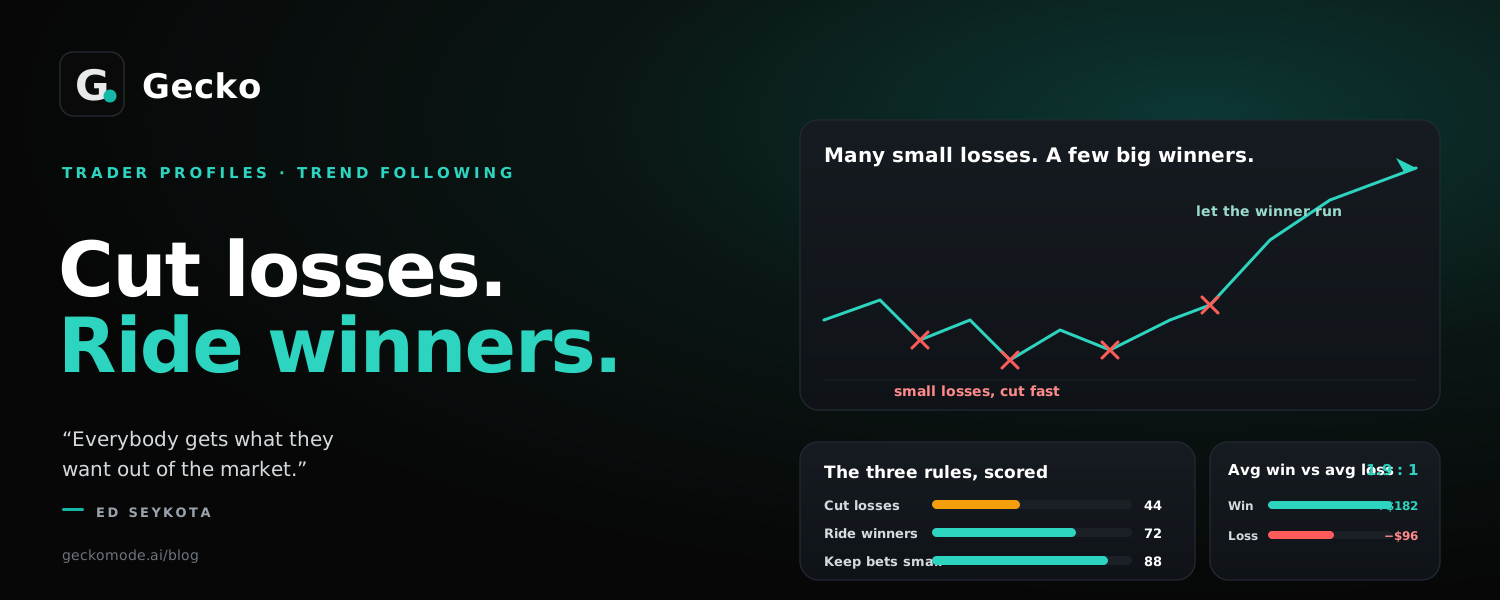
Ed Seykota pioneered computerized trend following and turned a small stake into one of the great track records in Market Wizards. His rules are short enough to fit on an index card. The hard part was never knowing them. It was becoming the kind of trader who follows them.
The trader behind the rules
Seykota built some of the first computerized trading systems in the 1970s and rode trends in the futures markets for decades. What makes him quotable is not the systems, it is his insistence that trading is mostly psychology wearing a chart. He treated the trader, not the market, as the variable worth studying. That is also why his lessons translate so cleanly into something you can measure about yourself.
“Win or lose, everybody gets what they want out of the market. Some people seem to like to lose, so they win by losing money.”
Ed Seykota, in Market Wizards by Jack Schwager
The uncomfortable idea: you are getting what you want
This is the line that makes traders flinch. Seykota’s claim is that people unconsciously trade out their needs. The trader who craves action gets action. The trader who needs to be right holds losers to avoid admitting a mistake. The one who fears success finds a way to give the gains back. It sounds mystical, but it has a very practical edge: if your results reveal your real intentions, then you cannot hide from your trade history. The behavior is the confession.
That reframes the whole project of improvement. You do not get better by deciding to want different things. You get better by seeing, in plain numbers, what your current behavior is actually optimizing for, and then changing the behavior one habit at a time.
Cutting losses, three times
Asked for the elements of good trading, Seykota answered with a joke that is not a joke: cutting losses, cutting losses, and cutting losses. The repetition is the point. Almost everything else is secondary to not letting a small loss become a large one. He put the stakes plainly: if you cannot take a small loss, sooner or later you will take the mother of all losses. The single position you refuse to close is the one that ends accounts.
“The elements of good trading are: 1, cutting losses. 2, cutting losses. And 3, cutting losses.”
Ed Seykota
Riding winners
The mirror image of cutting losses is letting winners run. Seykota’s edge as a trend follower came from a small number of large gains, which only exist if you stay in the trade after it turns profitable. The instinct to lock in a quick win feels safe and quietly caps the only trades that pay for all the small losses. Cut losses and ride winners are not two rules. They are the same rule pointed in two directions, and together they decide whether your average win is bigger than your average loss.
Keep bets small
His third rule is position sizing. Seykota kept risk per trade small on purpose, because survival comes first and because small bets keep emotion low enough to follow the other rules. He also warned, with a grin, that there are old traders and there are bold traders, but there are very few old, bold traders. Size is what turns a normal losing streak into a fatal one.
From belief to behavior: measuring Seykota in your own data
Seykota’s rules are unusually testable, because each one is a behavior with a number attached. You do not have to wonder whether you cut losses or ride winners. Your closed trades already grade you, and they grade honestly, which is the whole point of his “everybody gets what they want.”
| Seykota’s rule | The fingerprint it leaves in your trade history |
|---|---|
| Cut losses | Losses that run past your planned stop, the sign you are holding to avoid being wrong. |
| Ride winners | Average winner versus average loser. Winners smaller than losers means you are taking profits too early. |
| Keep bets small | The spread in your position sizing, and whether size jumps on impulse or after a loss. |
| Everybody gets what they want | Recurring patterns you would deny out loud but repeat on the tape, like a cluster of revenge trades after every red day. |
| Follow the rules | How often your actual trades match your stated plan, visible only when behavior is tracked over time. |
This is the case for a behavioral journal over a plain log. A log lists the trades. A behavioral read tells you what your trading actually wants, in Seykota’s sense, and what that costs you. Gecko scores exactly these patterns from an uploaded statement, including hold-time discipline, max loss versus gains, and the ratio of your average win to your average loss, so a rule that fits on an index card becomes a number you can watch yourself keep.
See what your trading actually wants →Free to start. No credit card. No broker connection.
Frequently asked questions
What is Ed Seykota’s trading philosophy?
Systematic trend following with strict risk control: cut losses, ride winners, keep bets small, follow the rules, and know when to break them. He treated discipline and self-knowledge as more important than any indicator.
What did he mean by “everybody gets what they want”?
That traders unconsciously trade out their psychological needs, so results reveal what a person actually wants. The pattern shows up in their behavior, even when they would deny it.
What are his trading rules?
Cut losses, ride winners, keep bets small, follow the rules without question, and know when to break them. He also said the three elements of good trading are cutting losses, cutting losses, and cutting losses.
How do you measure whether you cut losses and ride winners?
Through your closed trades: losses that run past the stop, an average winner smaller than your average loser, and wide swings in position size. A behavioral journal scores these automatically.
This article is part of Gecko’s trading psychology series. Quotations are attributed to Ed Seykota, including from Jack Schwager, Market Wizards (1989). Gecko is an educational and informational tool, and is independent and not affiliated with Mr. Seykota. Nothing here is financial, investment, or trading advice. Trading carries substantial risk of loss.
Drop in a single statement. Gecko produces a one-page Behavioral Diagnosis ranking your costliest habits in actual dollars. Free to start. No card. No broker connection.
Short notes, usually once or twice a month. Unsubscribe in one click.
No account needed. We use your email only to send Gecko blog posts, and the link at the bottom of every email opts you out in one click.
More on the blog
- The AI Debt Machine: Circular Financing, Off-Balance-Sheet Data Centers, and the Ghosts of Bubbles PastThe AI build-out has quietly shifted from cash to debt: hyperscaler bonds near $194 billion in 2026, private credit's share of AI financing up from about 9% to 34%, debt parked in off-balance-sheet vehicles, and a circular loop among Nvidia, OpenAI, Oracle and CoreWeave. What telecom, Enron and the 1920s say about it, and what a trader should actually do.
- When the Consumer BreaksHousehold debt booms have a long record of ending in slowdowns that forecasters miss. What that history says about markets, and about the most overlooked balance sheet in trading: your own.
- How Banking Crises Actually StartThe run is the last chapter, not the first. What 150 years of bank failures teach traders about reading stress, and about the mistakes made when the headlines finally arrive.